
Our Solution: The IMM Playbook
Smart Science for a Safer Community
At North Morrow Vector Control, we don’t believe in "one size fits all." We use Integrated Mosquito Management (IMM)—a multi-layered strategy that combines surveillance, biology, and targeted treatments. By using these tools together, we stop mosquitoes at every stage of their life cycle.
1. Source Reduction: Stopping it at the Root
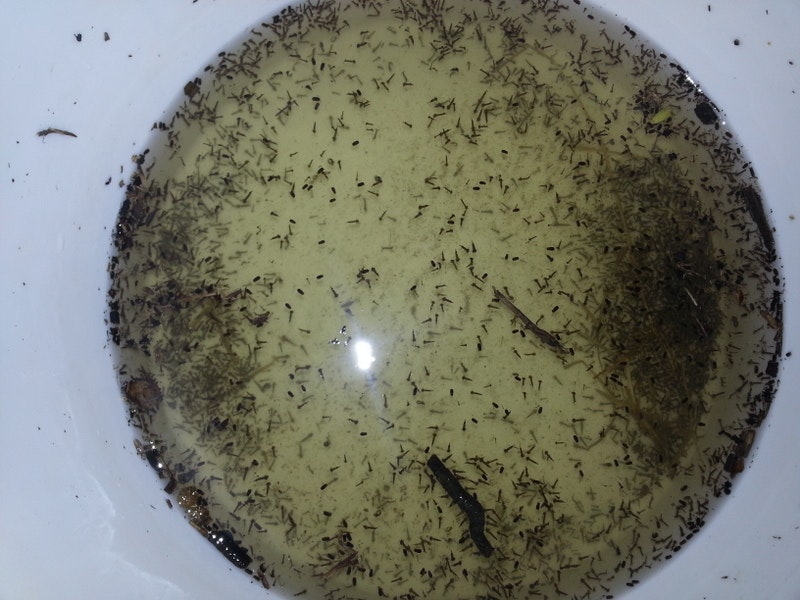
The best way to control mosquitoes is to take away their home. We manage water levels and irrigation practices across the district to eliminate breeding grounds.One Bucket, Hundreds of Mosquitoes. 🚫 This image perfectly illustrates how simple actions make a massive difference. Every stray bucket, unused wading pool, or forgotten tire can become a breeding hotspot. By simply turning it over, you stop hundreds of larvae from ever becoming flying, biting, disease-carrying adults. It’s the easiest play in the book!
You can help! Turning over buckets, wading pools, or troughs that hold water for more than 5 days makes a massive difference in your neighborhood.
2. Larvae Surveillance: High-Tech Scouting
Our field technicians don't guess—they track. Using tablets loaded with real-time GPS mapping and historical "hotspot" data, our team monitors breeding sites with precision. Every survey and treatment is recorded instantly, ensuring no puddle is left behind.

3. Biological Control: The "Mosquito Fish"
Meet our smallest employees: Gambusia affinis. These "Mosquito Fish" are small but mighty.
- Size: 1 to 3 inches.
- The Mission: They have a voracious appetite for mosquito larvae.
- The Benefit: They thrive in various temperatures and blend into their habitat, providing a natural, chemical-free way to keep populations down.
4. Larval Control: Targeted Protection
When we find larvae, we use highly specific "larvicides" that target mosquitoes without harming the broader ecosystem. We use three main scientific defenders:
- Bacterial (Bti): A mosquito-specific protein that disrupts the larva’s digestive system.
- Spinosyns: A soil-based toxin that stops the larva’s nervous system.
- Growth Regulators (S-Methoprene): Think of this as "birth control" for mosquitoes; it prevents larvae from ever becoming biting adults.
- Surface Oils: For the final "pupae" stage, we use specialized oils that prevent them from breathing, naturally stopping them in their tracks.
5. Adult Control: The Final Line of Defense
When mosquitoes reach the flying, biting stage, we deploy our Adulticide trucks (fogging). Before every season, we calibrate our equipment with precision droplet testing to ensure we are using the minimum amount of product for maximum effect.
Larvicides
- Altosid P35
- Altosid XR Briquets
- GB 1111
- MetaLarv S-PT
- MetaLarv XRP
- Natular G30
- VectoBac G
- VectoLex WSP
- VectoMax FG
- VectoPrime FG
Adult Mosquito Control

The final step in our Integrated Mosquito Management approach is adulticiding or fogging. We trigger this when mosquitoes mature into flying adults.